
A Tibetan friend in Switzerland passed on this bit of revelation to me. He had been watching the conclusion of the Beijing Games on German TV (ZDF) and noticed that when they sung the national anthem the lyrics didn’t quite seem to match the translation that appeared on the giant screen.
Remembering the First Rangzen Marcher
Taktser Rimpoche was convinced that Tibet needed independence not for some exalted ideological reason but as a fundamental condition, an essential requisite for the survival of the people, their language, their culture and even their religion.
Cinema ’59
The Russian Revolution of 1917 sparked off a revolution in the way the function of entertainment and art, especially cinema, changed to become a powerful tool of social and political transformation.
The Fear in Lhasa (A poem by Woeser)
A hurried farewell to Lhasa,
Where the fear is in your breathing, in the beating of your heart,
In the silence when you want to speak but don’t,
In the catch in your throat.
A Celebration of Lies
As the Beijing Olympics comes to a close there are probably not many people on this planet who have not heard, read about, or witnessed the series of lies, deceptions, scams, manipulations, control-operations….
Acme of Obscenity
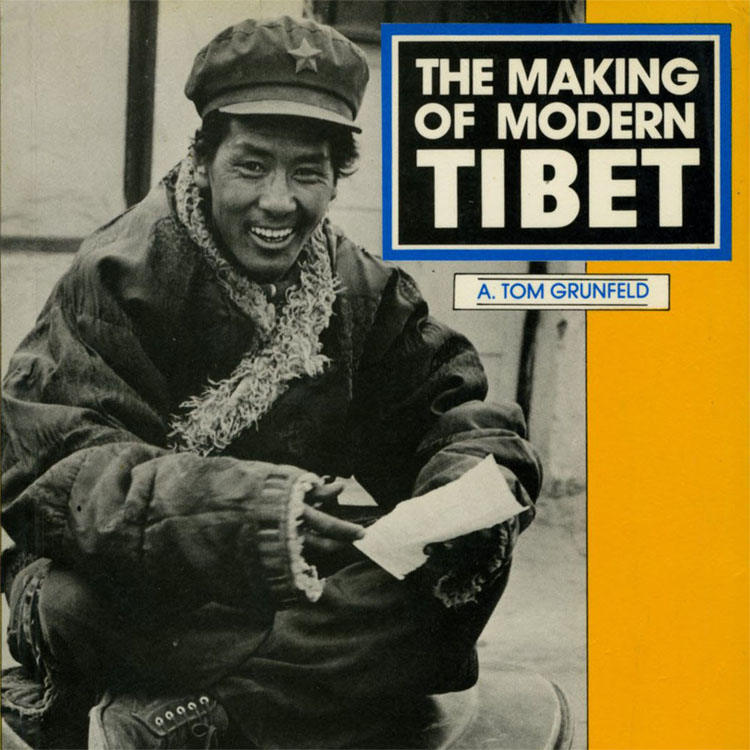
In a recent piece (Running Dog Propagandists) I made a reference to an old review essay of mine of Tom Grunfeld’s Making of Modern Tibet. A couple of readers emailed in to say they could not locate the piece. I discovered I had not posted it on Phayul.com and that it was impossible to find on WTN or Tibetwrites.org. So I am reissuing it here to round off our “running dog” discussion on this blog.
Discussing Tibet, Without the BS
For a book dealing with Sino-Tibetan relations Warren Smith’s new work takes an unusual stance. It refuses to take the currently fashionable “a plague on both your houses” attitude…
Black Annals: Goldstein & the Negation of Tibetan History (Part II)
In Marxist inspired narratives of feudal (or capitalist) states collapsing of their inherent contradictions, there should fittingly be a role for a revolutionary movement and perhaps even a revolutionary hero. Goldstein provides us a detailed account…
Black Annals: Goldstein & the Negation of Tibetan History (Part I)
What made many in the Tibetan world stand up and pay attention to Goldstein’s A History of Modern Tibet, when it appeared in 1989 was the unmistakable impression the book gave that here was a radical reinterpretation of Tibetan history.
The Fear in Lhasa as Felt in Beijing (Part 1) – Woeser
Earlier, I had heard from JM that there was a Tibetan like this who had come from Lhasa and seldom went out of the house. He also hadn’t gone to parties held by fellow Tibetans. The reason is that his very typical Tibetan looks caught everyone’s attention in present-day Beijing.